
Virtual reality · Industrial digitalisation · Augmented reality
Immersive museums with augmented reality and virtual reality
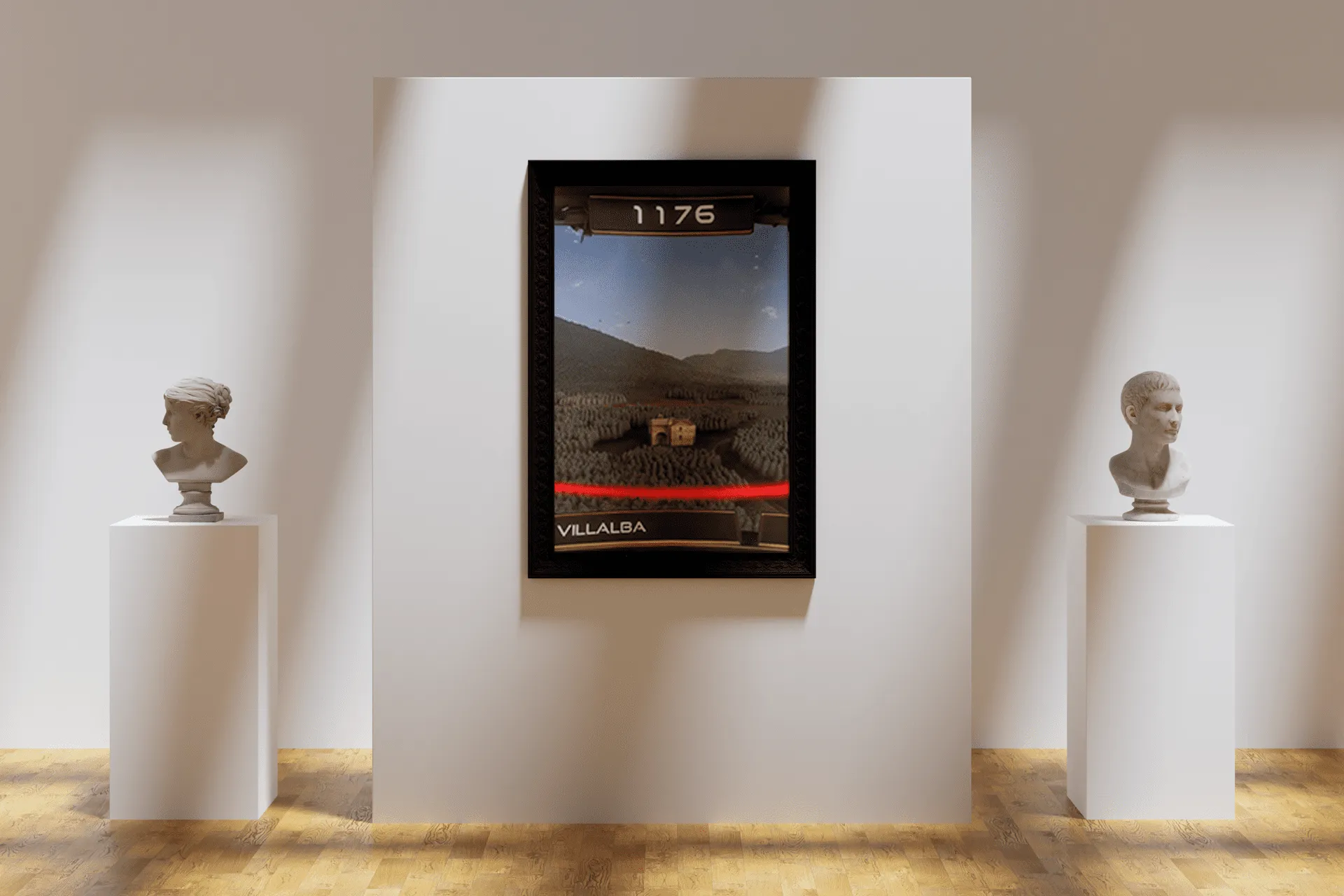
Immersive museums have become a real driver of cultural change in recent years. What used to be a static, silent experience has become a sensory journey that invites interaction. Culture today is experienced actively: museums aim to stir emotions, encourage learning and offer experiences that last.
But what exactly do we mean by immersive museum design, and why has it become one of the top choices for the world's most innovative museums?
What exactly is immersive museum design?
Immersive museum design is a museological strategy that uses digital technology to enrich the way cultural heritage is presented and experienced. It goes beyond digitising collections: it aims to create experiences where the physical and the virtual coexist to give visitors a deeper, more interactive and memorable story.
In immersive museums, this approach turns a traditional visit into a multisensory experience. Augmented reality in museums adds layers of information and animation over the objects, while virtual reality in museums transports visitors to historical or artistic settings recreated in 3D.
The result is a museum model in which the public stops being a passive spectator and takes centre stage: exploring, participating and learning actively. Immersive museum design also opens the door to global accessibility, allowing people anywhere to explore collections digitally.
In short, immersive museum design redefines the role of the museum, turning it into a living, participatory space suited to the expectations of new audiences.
The technologies behind immersive museums
Immersive museums rely on a set of technological tools that expand the cultural experience:
Artificial intelligence:
Virtual assistants that guide visitors, answer questions and tailor the route to each user's interests.
Virtual reality in museums:
Creates fully digital environments where visitors can travel in time, walk through lost cities or explore exhibitions that are physically inaccessible.
Augmented reality in museums:
Adds information and animation over the real works. A painting can show what it looked like before restoration, or a sculpture can come to life on a phone screen.
Mixed reality:
Combines physical objects with interactive digital elements in real time.
Holograms and immersive projections:
Create high-impact visual experiences, from artists who “come back to life” in the gallery to all-enveloping historical reconstructions.
Each technology plays a different role, but together they form an ecosystem capable of completely transforming the cultural experience.
The benefits of immersive museum design
Museum design with immersive technology responds to a real need of today's museums: offering experiences that connect with increasingly diverse and demanding audiences. Integrating technologies such as augmented reality or virtual reality in museums not only transforms the visit but brings tangible advantages for institutions and their visitors alike.
The main benefits include:
- Greater audience engagement. Visitors stop being passive observers and become active explorers, able to interact with heritage and experience it first-hand.
- Innovative education. Immersive experiences strengthen understanding and memory through practice, making learning deeper and longer-lasting.
- Universal accessibility. Thanks to virtual tours and augmented reality, anyone, anywhere, can access the content.
- Attracting new audiences. Young people and digital natives find in these experiences a reason to engage with culture.
- Heritage conservation. Digitisation and 3D reproductions help protect fragile works and share them without risk.
- Tourism and economic value. Immersive museums boost their ability to attract visitors, diversify income and position themselves as leaders in cultural innovation.
Taken together, immersive museum design adds value by combining accessibility, learning and sustainability, placing museums at the heart of a new way of experiencing and sharing culture.
Inspiring examples of immersive museums around the world
Augmented and virtual reality in museums are already a reality in a range of projects:
Anne Frank House (Amsterdam) → VR lets visitors walk through the Frank family's historic hiding place, with great emotional impact.
Trickeye Museum (South Korea) → an AR pioneer that turns murals and 3D sets into interactive experiences through an app.
Museu de Menorca (Spain) → at REM Experience we created its 3D exhibition space, allowing visitors to explore every room and its key pieces with detailed cultural information.
Mahou San Miguel virtual museum (Spain) → more than 500 historical pieces digitised in an immersive online environment.
The Metropolitan Museum of Art, New York (The Met) → combines AR and VR in apps and exhibitions that present its collections from new perspectives.
These examples show how museum design with immersive technology is already transforming institutions worldwide. Far from being a passing trend, it has become a key tool for attracting new audiences, enriching the cultural experience and positioning museums as leaders in innovation.
Immersive museums as a global trend
The growth of immersive museums is a global phenomenon responding to a clear public demand: more dynamic, accessible and memorable cultural experiences.
More and more institutions are embracing immersive museum design, bringing augmented reality and virtual reality into their exhibitions. This not only improves the educational and tourism experience but also positions the museum as a benchmark for cultural innovation.
The spread of these initiatives confirms that we are witnessing a structural transformation of contemporary museology.
The future of immersive museums
The future of immersive museums points to an even more ambitious and enriching scenario. The trend is not just about adding screens or virtual reality headsets, but about creating experiences that stimulate every sense. There is already talk of multisensory routes that engage not only sight and hearing but also touch and even smell, to offer total immersion in history and art.
Personalisation will be another major step forward. Thanks to artificial intelligence, museums will be able to tailor information to each visitor's interests in real time, building unique routes adapted to every profile. At the same time, the growth of global virtual museums will make it possible to explore collections from anywhere in the world on any device, removing physical borders.
Cultural inclusion will also lead the way: experiences will be designed for all abilities, ensuring culture is universally accessible.
The future of immersive museum design will therefore be hybrid, global and inclusive. In this new paradigm, immersive museums will not be an add-on but the centre of a closer, more participatory and more human way of experiencing culture. At REM Experience we are already working towards that future, developing interactive digital museum design solutions so museums are ready for it and can connect with their audiences in more innovative ways.