
Virtual labs
Virtual labs for training, the new horizon for schools and universities
Virtual training labs are already a reality in the United States and are beginning to be introduced in Spanish universities and schools, because they improve students' training by bringing them closer to real situations in a motivating way, without barriers of time or place.
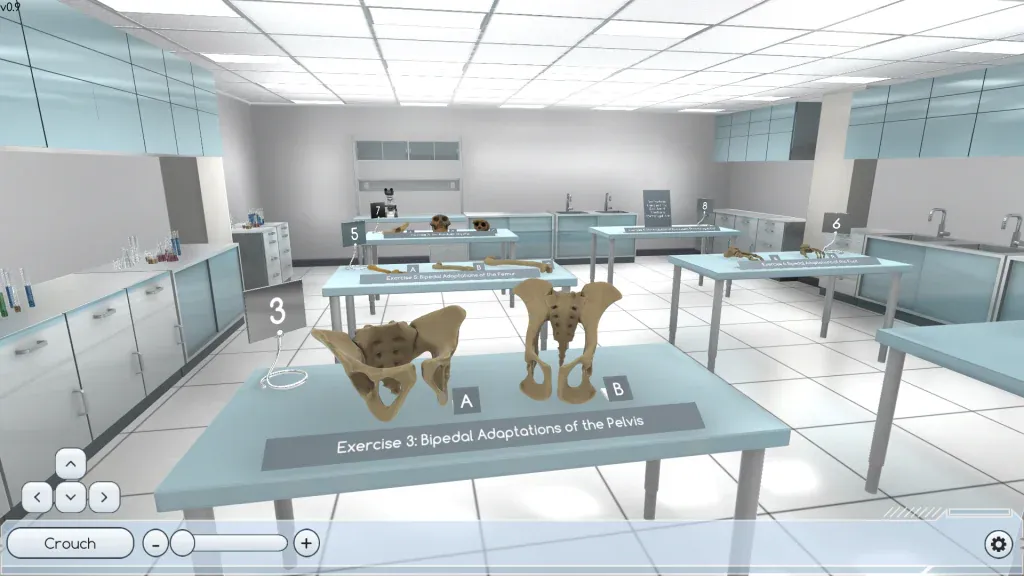
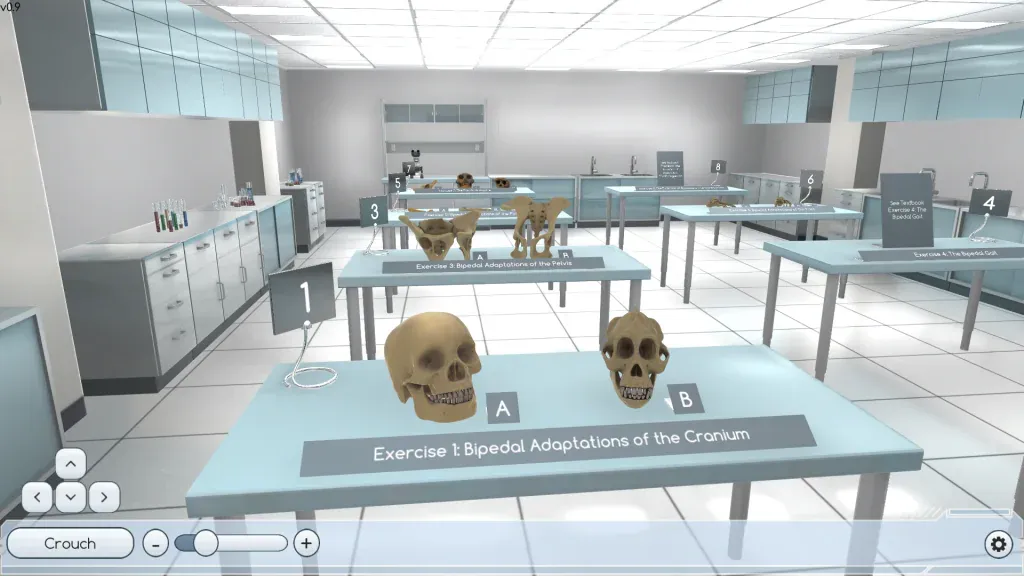
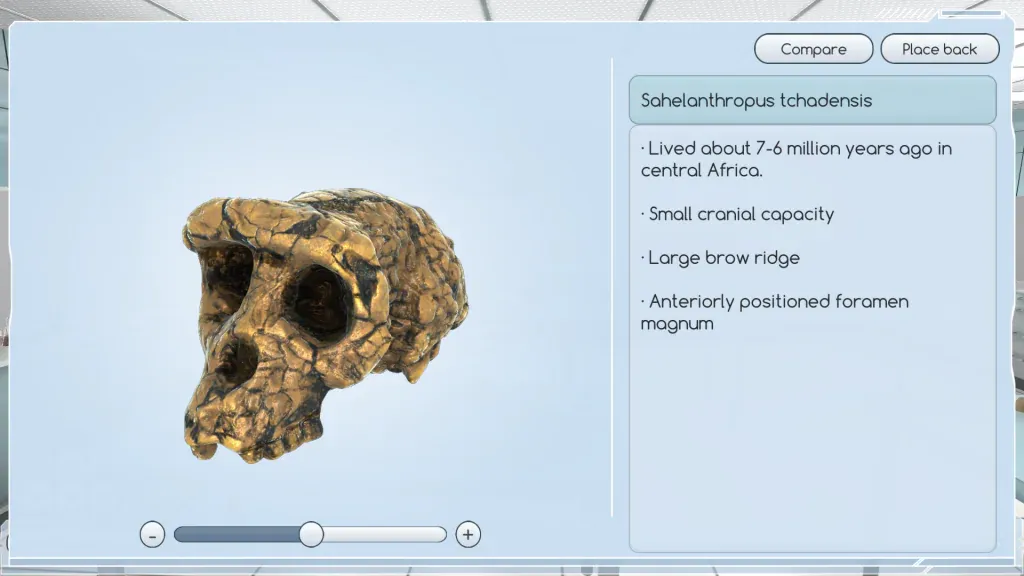
At REM Experience we are pioneers in this field, with initiatives such as developing a Physical Anthropology lab with 16 skulls and bones recreated in 3D for the digital textbooks of one of the leading anthropology publishers in the USA. The lab lets students examine the bones in detail, orbiting, rotating, measuring and zooming in on them. All without limits on time or practice, because virtual labs are always available, supporting e-learning.
Of great interest is the study ‘Virtual laboratories in 3D environments for skills training’ published by Universitat Jaume I, in which the authors Mercè Gisbert, Vanessa Esteve and Francesc M. Esteve point out that today's students “are already digital citizens”, so “it is not enough for teachers to guarantee access to knowledge; they must prepare their students to take responsibility for turning learning into a constant challenge, while providing analogue and digital learning scenarios that require continuous decision-making and permanent active guidance (Bates, 2015).” This is where tools such as virtual labs become highly relevant.
As Gisbert, Esteve and M. Esteve explain in their research, “students in general, and university students in particular, need scenarios in which they have to apply knowledge as if they were in a professional —and sometimes also personal— setting. Active listening is not enough; they need to be able to take action, even if it is simulated.” That is why virtual labs and 3D training simulators are not a tool for the future but for the present.
“The fact that teachers and students can access virtual content equally easily, and that we are all both producers and consumers of information, has changed the rules of education and makes it necessary to redefine both the settings and the tools we need to develop to guarantee the learning process,” the authors note.
VIRTUAL LABS
Virtual labs emerged from the need to reproduce complex and dangerous situations, scenarios or processes artificially or through simulation, to make learning more efficient. However, REM Experience's CEO, Andreu Florit, explains that virtual labs are no longer developed only to reduce risk: “they are created to optimise learning in any field or subject, encouraging meaningful learning through an immersive, motivating experience that also brings significant cost savings compared with training in real settings.”
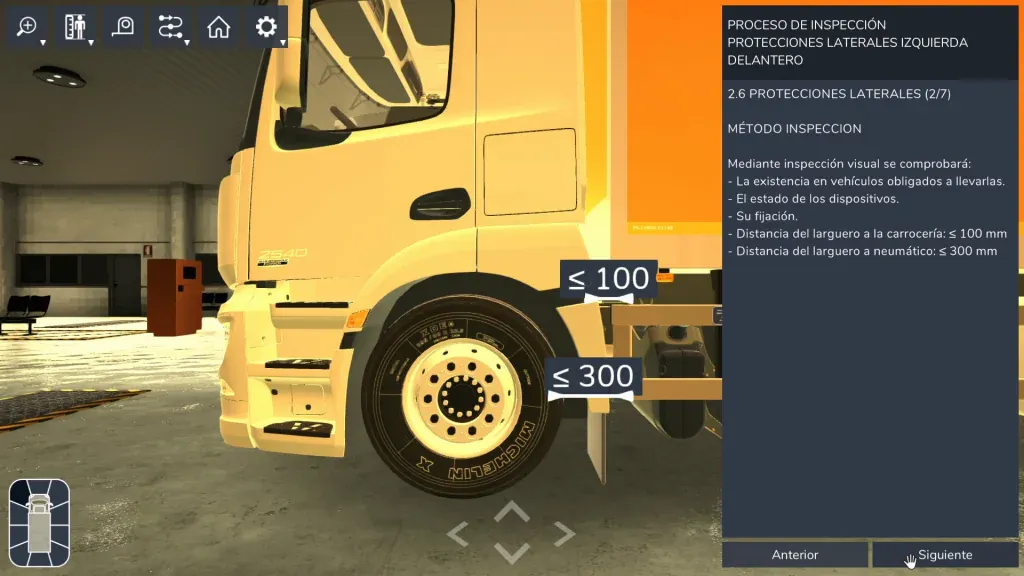
In their study, Mercè Gisbert, Vanessa Esteve and Francesc M. Esteve note that virtual labs can be “an excellent workspace for remote collaboration, experimentation, research or any other creative activity that can produce good learning outcomes.” They are also a viable alternative for training professionals in different fields, as shown by the simulator for training Applus+ vehicle inspectors developed by REM Experience.
IMMERSION AND IMMEDIACY
Virtual labs have many advantages, such as ease of use, immersion, immediate feedback on actions and the chance to collaborate with others. For Mercè Gisbert, Vanessa Esteve and Francesc M. Esteve, “the immersive nature of these virtual worlds, with physical, social and cultural rights and duties, not only helps develop students' digital identity but also their social presence (Esteve-González, 2015).” That is something we at REM Experience have seen in our own developments.
On top of this, these labs have a direct impact on students' motivation and engagement in learning, two of the biggest challenges in education (Glover, 2013).