Projects
Órbita Laika · Augmented reality for TV
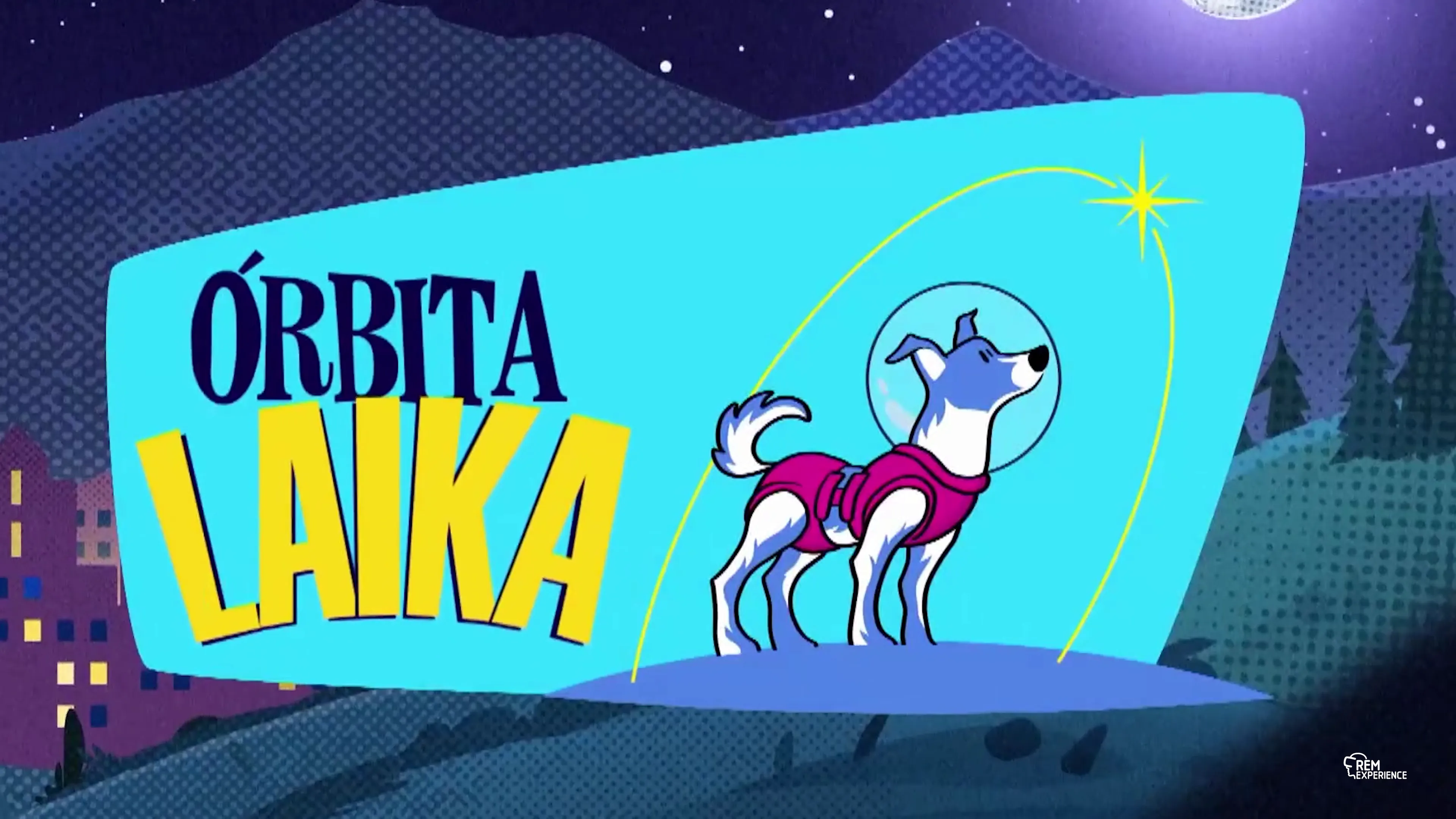
We developed the augmented reality for Órbita Laika, the science outreach programme on RTVE's La 2, creating 3D models and immersive content for all 11 episodes of its latest season.
Augmented reality applied to television can turn complex content into visual experiences that are far clearer, more engaging and easier to understand. At REM Experience we developed the augmented reality content for Órbita Laika, the science outreach programme on Spanish public broadcaster TVE's La 2, creating visual assets and 3D models for all 11 episodes of its latest season.
Órbita Laika brings science to a mass audience through a lively, informative format in which audiovisual resources play a key role. Augmented reality fits into that television language to depict concepts that would be hard to picture if explained only in words or conventional images.
Augmented reality to explain science
One of the main strengths of augmented reality for television is its ability to place virtual objects, processes and phenomena right inside the programme's space.
Viewers can see three-dimensional elements integrated into the set and grasp what is being explained far more intuitively.
In a science outreach programme like Órbita Laika, this technology turns abstract concepts into visual representations that very different audiences can understand, whatever their prior knowledge.
Augmented reality thus becomes a communication tool that helps simplify complex ideas without sacrificing scientific rigour.
3D modelling for television content
For the latest season we worked on all 11 episodes, developing the augmented reality content required for each topic.
Each episode tackles different scientific questions, so we had to create specific visual solutions and build 3D models tailored to each piece of content.
The work combines modelling, texturing, preparation of three-dimensional assets and technical development so that the virtual elements integrate properly into the audiovisual production.
This variety is one of the project's main challenges: there is no single experience repeated throughout the season. Each episode requires studying the scientific content and working out the best way to represent it visually with 3D and augmented reality.
Technology in the service of outreach
Using augmented reality on television is not just about creating a striking visual effect.
Its real value comes when the technology helps viewers understand the information better.
An invisible phenomenon, a structure that is hard to picture or a process that happens on a scale that is too large or too small can be represented virtually on set and explained instantly.
That is why augmented reality applied to education and outreach has huge potential for scientific, cultural and educational content.
Combining narration, presenter, audiovisual production and three-dimensional graphics creates an experience that makes learning easier while keeping the entertainment value television needs.
Immersive content for audiovisual production
The Órbita Laika project also shows how immersive technologies can be built into audiovisual productions without becoming the star of the show.
The technology serves the content.
The three-dimensional models and augmented reality scenes support the explanations, add context and make it possible to show things that cannot physically be shown in a television studio.
This integration of audiovisual production, 3D modelling and augmented reality opens up many possibilities for TV programmes, documentaries, educational content, events, presentations and digital communication formats.
Augmented reality and 3D for television and communication
At REM Experience we develop augmented reality experiences, 3D content and immersive solutions for television, communication, education and outreach, tailoring each development to the narrative and technical needs of the project.
Our work on the 11 episodes of Órbita Laika's latest season shows how these technologies can turn complex scientific information into visual content that is understandable, engaging and entertaining.
Augmented reality lets hard-to-depict concepts take shape in front of the viewer and become part of the television story itself.
The result is a way of communicating in which science, television, 3D modelling and augmented reality work together to make knowledge more visual, accessible and appealing to every audience.